Thursday, 12 May 2016

Soil Science

Soil Science - What grows in the Soil?

The Science Learning Hub has a number of great resources online, this is one of them
Observing soil microbes - website how to make one
In this activity students make a soil habitat for microbes to live in, and then they can observe what kinds of microbes grow in the different conditions - aerobic and anaerobic.  This could be set up in class and observed over a long period of time, this a great opportunity for students to see what happens to colonies of microbes over time.  
Soil Habitat
Soil profiles - Tell you what has happened in the past.


Looking a soil profile for an area, enables you to understand the history surrounding the development of the landscape.

Tuesday, 26 April 2016

Mastitis

This is an interactive workshop day hosted by Dairy NZ, LIC, AgResearch and University of Waikato where Year 13 students that enjoy Science to experience what a careers could be available in the Agricultural sector.
DairyNZ really need
The day consists of students experiencing 4 different interactive workshops with each of the hosts.

This year the morning workshops consisted of:

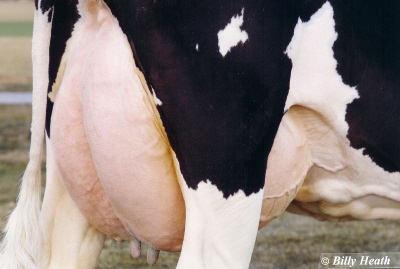
Normal cow udder
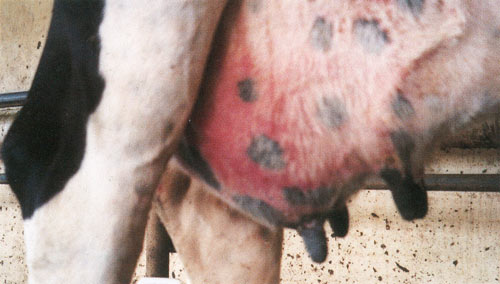
Mastitis is the inflammation of the mammary gland and udder tissue,  It is a bacterial infection that has entered through the teat canal of the udder.  
Mastitis can affect only quarter of the udder because each quarter compartment is completely separate from the others.  
Symptoms of mastitis are: inflammation (swelling) the milk appears watery, has clots in it, flakes or pus, other symptoms can include lost of appetite, increase in body temperature, reduction in mobility.
Somatic cell counts are also taken often to help detect any clinical mastitis, this is where there is no signs or symptoms yet, however is detected because the somatic cell count is raised, this shows that there is a infection that the body is fighting.  Somatic cells are mostly leukocytes (white blood cells)
Inflamed udder - Mastitis


The SCC is quantified as the number of cells per ml of milk. In general terms:
  • An individual cow SCC of 100,000 or less indicates an 'uninfected' cow, where there are no significant production losses due to subclinical mastitis.
  • A threshold SCC of 200,000 would determine whether a cow is infected with mastitis. Cows with a result of greater than 200,000 are highly likely to be infected on at least one quarter.
  • Normal udder
    inflammation of udder tissue
    Normal udder
    inflammation of udder tissue
  • Cows infected with significant pathogens have an SCC of 300,000 or greater.
There are two sources of infection, contagious and environmental. 
Contagious bacteria are the bacteria that live on the cow's udder transferred during and after milking

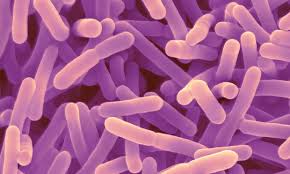
The main bacteria are Escherichia coli (E. coli)Streptococcus uberis and Staphylococcus aureus

E.Coli

Staph aureus bacteria


There are different nutrient agar used for the different bacteria, this is used to confirm what type of bacteria are responsible for the infection.
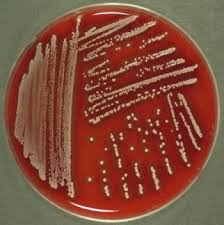
Plating 

Wednesday, 30 March 2016

Harvesting Maize - Quality Control

Finding our way through the maize crop... I didn't manage to get lost.

When sweet corn is ready to harvest, the husk will still be wrapped tightly around the ear; the silks will be brown.
Maize                                              Sweetcorn
 Is the maize ready to harvest???  Maize is like corn, however has a lot starch and therefore does not taste as sweet as sweet corn.  Also maize is harvested when the cob is a lot drier than sweet corn.Also the kernels on maize are a bright yellow and a lighter yellow on sweet corn.  

                     milk line test

To tell whether the maize is ready to harvest and the dry matter is between 30-38%.  The milk line technique is used.  This is where on one kernel a sharp object (ball point pen tip) is pushed in and  run the length of the kernel and note when the pen goes from solid starch to milk (liquid) starch.  It should do this 2/3 of the way down the kernel if it ready for harvest.  


 The lovely Dee, weighing the amount of maize produced off a certain area, this is then used to calculate the yeild off the paddock.


The team harvesting maize for quality purpose, measurements eg. height, weight, and dry matter.

Blood Testing


Blood testing 

 
There are a lot of things that can be tested through an animal's blood.  Blood is usually collected through the tail vein, however if it can not be drawn from here it can be taken from the jugular vein in the neck of the animal.
Once the blood is taken off the animal it is stored on ice, then it is returned to the lab to be processed which could involve it being spun in a centrifuge to separate the plasma from the red and white blood cells.


Gen cuts and Rising Plate Meter

 Jen Cuts

Also known as a low cut harvester.  This little machine enables you to cut crops to various crops and harvest it and weigh it and work out the amount of dry matter in a block.


Rising Plate meter
This is a farm management tool that farmers use to quantify pasture cover on a farm.  It is one of the tools that is used to help allocate pasture to stock.  If you do it pre and post grazing measurements this ensures that the pasture has been grazed enough and or the stock are getting enough food. Basically the plate meter measures the compressed height of the grass and using an equation (which has been calibrated) converts the grass height into kg DM (kilograms dry matter)
Filips Electronic Folding Plate Meter EC-09 thumbnail

If you are interested in more about the Rising Plate meter go to the following website where it explains it. www.dairynz.co.nz/media/253639/1-15_Using_the_Rising_Plate_Meter.pdf

Wednesday, 23 March 2016

Nitrogen - Why is it important?

Nitrogen is an essential nutrient for plant (vegetative) growth. (quality and yield) Nitrogen is important because it is the building blocks for proteins, nucleic acids and it is also a component of chlorophyll and required for several enzyme reactions.  
Even though there is an abundance of nitrogen around, and air is made up of approximately 79% very little of this is available to plants.  Most of this nitrogen has to be fixed by micro-organisms before it can be used by forms of life.  Manufacturing Nitrogen fertilizers is one way of making it available to other life forms.  
Because Nitrogen is such an important element for plants it needs to be managed well, otherwise it could and can lead to environmental problems.
Even though the nitrogen applied to land is generally taken up my plants.  Livestock wastes return a considerable amount to the soil.  Nitrate (NO3)forms from this waste and because this soluble it easily drains (leaches) into the streams and rivers nearby before the plants can absorb it all.  This in turn affects ecosystems.
Of the total nitrogen applied in 2012, an estimated 137 million kilograms leached from the soil. Only 19 percent of the loss was directly from fertiliser; the remainder was through livestock waste.”Trends in nitrogen leaching from agriculture


Facts and Figures about Nitrogen and Dairy Farming

Some facts and figures
To appreciate the enormously of the problem, We need to look at some figures.  Dairying in NZ makes up 25% of New Zealand’s export earnings. There is approximately 1.8 million hectares of dairying land.  In NZ there are 5 million dairy cows. The average number of cows per hectare is approximately 2.85.  74% of dairy herds are in the North Island and 34% of that are located in the Waikato.
On average the rate of nitrogen applied by fertiliser is 100kg/ha/year.  In 2007 there was 45kg/ha/year of nitrogen leached.
I have learnt that cows can consume a great amount of pasture a day (90-110kg) and drink anywhere from 15-60L of water.  Then they getting rid of anywhere from 30-60kg of faeces and peeing anywhere from(15-30kg). Nitrogen is in various forms in the urine.  Ammonia (volatile gas) Ammonium  and nitrates.  The cows are consuming all the nitrogen that is available in the paddock (???) to them and realistically a cow only requires about 200g of N per day.Therefore there is rather a large of amount of excess,
Urine only covers about 2% of a paddock after grazing.  Only a quarter of a paddock will get N from urine over a year.  Hence one of the reasons that Nitrogen must be applied by fertiliser.
In Autumn and Winter when there are large amounts of rain this where nitrogen leaching can cause a problem.  One method that is used to reduce amount of urine and faeces going on a paddock is to stand cows off grass, this is where Cows are put on a pad for various amounts of time over a 24h period.  Eg.  Cows are on grass during day and on pad at night.

From this research and background reading I am beginning to get an appreciation for the imbalance of N in our system there is.  Hopefully this trial can shed some light on some other possibilities that could help reduce nitrogen leaching.   

Some information courtesy of DairyNZ Research Technician - Chris Roach